
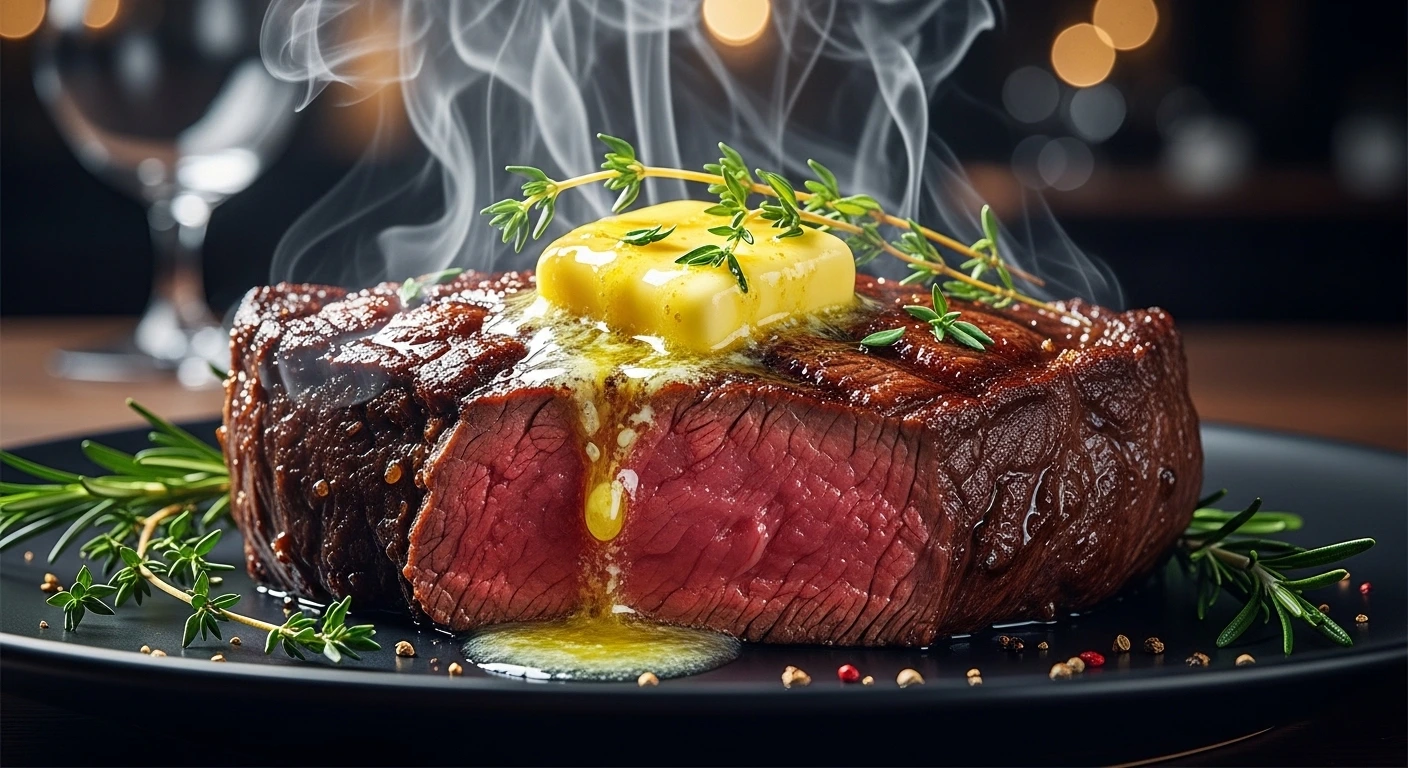
AI image generation tools like Gemini can now create food photography that looks as luxurious as a Michelin-star restaurant advertisement.
With the right prompt structure lighting, camera specs, and composition you can produce stunning food images suitable for ads, menus, and social media.
Here are 10 high-end food photography prompts designed to generate professional restaurant-style images.
Gourmet Steak Restaurant Ad
luxury restaurant food photography of a perfectly cooked medium-rare steak on a dark ceramic plate, rosemary garnish and sea salt flakes, dramatic side lighting, steam rising from the meat, cinematic shadows, shot on 85mm lens, shallow depth of field, black elegant background, michelin star restaurant style, ultra realistic, 8k
Fine Dining Pasta
professional food photography of creamy truffle pasta served in a minimalist white plate, parmesan flakes and fresh herbs on top, soft natural window light, elegant restaurant table setting, shot on 50mm lens, shallow depth of field, michelin restaurant advertisement style, ultra detailed
Luxury Dessert Plate
high-end dessert photography of a chocolate lava cake with melted center, powdered sugar dusting and raspberry garnish, dramatic lighting, dark moody background, gourmet restaurant plating, shot on 85mm lens, ultra realistic, michelin restaurant advertisement
Sushi Fine Dining Plate
luxury sushi photography with premium salmon nigiri and tuna sashimi arranged artistically on a black slate plate, chopsticks beside the plate, soft cinematic lighting, japanese fine dining aesthetic, shot on 50mm lens, shallow depth of field, ultra realistic
Gourmet Burger Advertisement
high-end burger photography with melted cheddar cheese, crispy bacon, fresh lettuce and tomato, glossy brioche bun, dramatic studio lighting, dark restaurant background, shot on 85mm lens, shallow depth of field, luxury fast food advertisement style
Elegant Breakfast Plate
luxury breakfast photography with avocado toast topped with poached egg and microgreens, minimal modern plate, soft morning sunlight from window, elegant cafe atmosphere, shot on 35mm lens, ultra realistic food styling
Gourmet Seafood Plate
michelin star seafood dish with grilled lobster tail and lemon butter sauce, elegant white plate, dramatic restaurant lighting, steam rising from the dish, shallow depth of field, shot on 85mm lens, luxury food photography
Italian Pizza Restaurant Ad
authentic italian pizza with melted mozzarella, fresh basil and tomato sauce, wood-fired oven background, warm cinematic lighting, rustic italian restaurant atmosphere, shot on 35mm lens, shallow depth of field, ultra realistic food photography
Fine Dining Salad
modern fine dining salad with colorful vegetables and edible flowers, artistic plating, elegant white ceramic plate, soft natural lighting, minimal luxury restaurant aesthetic, shot on 50mm lens, ultra realistic
Gourmet Coffee Dessert
luxury coffee dessert photography with cappuccino and chocolate pastry on marble table, soft cafe lighting, warm tones, elegant cafe advertisement style, shot on 85mm lens, shallow depth of field, ultra realistic
How Restaurants Use AI Food Photography
In recent years, restaurants and food brands have started using AI-generated images to create professional-looking food photography without the high cost of traditional photoshoots. With tools like Gemini and DALL-E, businesses can generate high-end images that resemble Michelin restaurant advertisements in just a few seconds.
1. Social Media Marketing
Restaurants need fresh and attractive visuals for platforms like Instagram and Facebook. AI allows them to quickly generate beautiful food photos that attract attention and increase engagement without organizing a full photoshoot.
2. Menu and Website Design
Many restaurants use AI-generated food images for digital menus and websites. This is especially useful for new restaurants that may not yet have professional food photography.
3. Advertising Campaigns
AI food photography can be used for promotional posters, online ads, and delivery app listings. Brands can test multiple styles and compositions instantly, which would normally require several photoshoots.
4. Concept Visualization
Chefs and restaurant owners can also use AI images to visualize new dishes before they are even created. This helps in planning presentation styles and marketing visuals for upcoming menu items.
5. Faster Content Production
Traditional food photography requires lighting setups, photographers, stylists, and editing. AI tools dramatically reduce production time, allowing restaurants to create marketing visuals in minutes.
As AI image generation continues to improve, many restaurants are starting to combine real photography with AI-generated visuals to produce creative and eye-catching marketing content.
Tips for Creating Realistic Food Photography Prompts
Creating realistic AI food photography is not only about describing the dish. The secret lies in combining food details, lighting, camera specifications, and atmosphere in the prompt. When done correctly, AI tools such as Gemini can generate images that look almost identical to professional restaurant photos.
Here are some key tips to improve your food photography prompts.
1. Describe the Food in Detail
Instead of writing simply “pizza” or “steak”, describe the texture, ingredients, and presentation.
Example:
- melted mozzarella cheese
- crispy bacon slices
- glossy brioche bun
- fresh basil leaves
These details make the image look more appetizing and realistic.
2. Add Professional Lighting
Lighting is one of the most important elements in food photography. Many restaurant ads use dramatic lighting to highlight the texture and steam coming from the dish.
Useful prompt keywords include:
- soft natural window light
- dramatic studio lighting
- warm restaurant lighting
- cinematic shadows
3. Use Camera Specifications
Adding camera information makes the image more photorealistic. Professional food photographers often use portrait lenses to create a shallow depth of field.
Examples to include in prompts:
- shot on 85mm lens
- shot on 50mm lens
- shallow depth of field
- professional food photography
4. Include the Environment
Food photos become more convincing when the environment is described. Restaurants often include elegant tables, marble surfaces, or rustic wooden textures.
Examples:
- marble restaurant table
- elegant fine dining plate
- rustic Italian restaurant atmosphere
- dark moody restaurant background
5. Add Steam and Motion Details
One trick used in restaurant advertising is showing heat and freshness.
You can add words like:
- steam rising from the dish
- melting cheese
- dripping sauce
- freshly grilled texture
These elements make the food feel alive and freshly prepared.
By combining detailed food descriptions, professional lighting, and camera specifications, you can create AI food photography that looks almost identical to images used by high-end restaurants and Michelin-style advertisements.